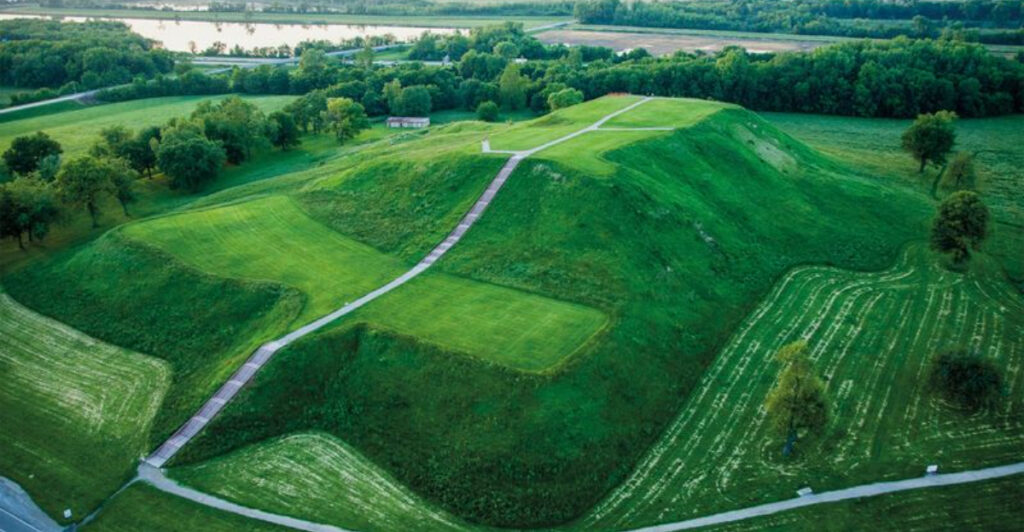
America’s past is far older and more complex than most textbooks suggest. From ancient cliff dwellings to mysterious mounds and lost colonies, these 15 archaeological sites have rewritten our understanding of U.S. history—and continue to astonish researchers today.
1. Mesa Verde – Montezuma County, Colorado

The cliff dwellings of Mesa Verde, a UNESCO World Heritage Site, were built by the Ancestral Puebloans and abandoned by 1300 CE. Over 600 dwellings offer invaluable insights into ancient architecture, agriculture, and social organization. These structures, carved into the cliffs, demonstrate the ingenuity and adaptability of their builders. The community’s mysterious disappearance continues to intrigue historians and archaeologists. Mesa Verde stands as a testament to a once-thriving society that adapted to the challenging environment of the American Southwest.
2. Chaco Canyon – New Mexico

Chaco Canyon, with its enormous multi-story stone buildings, was a cultural and ceremonial center for the Ancestral Puebloans from 900 to 1150 CE. The site’s solar alignments and extensive trade networks reaching Mesoamerica highlight its significance. Chaco’s architecture reflects a deep understanding of astronomy, engineering, and social organization. It served as a hub for religious and economic activities, drawing people from various regions. The grandeur of Chaco Canyon continues to captivate researchers, offering a glimpse into the sophisticated societies of ancient North America.
3. Jamestown – Virginia

Jamestown, the first permanent English settlement in North America, was established in 1607. Excavations have unearthed evidence of cannibalism, disease, and desperation, reshaping our understanding of early colonial life. These findings reveal the harsh realities faced by settlers as they struggled for survival. The colony’s turbulent history challenges the myth of colonial glory, highlighting the complexities of early American colonization. Artifacts and remains provide a poignant narrative of human endurance and adaptability in the face of adversity.
4. Serpent Mound – Adams County, Ohio

The Serpent Mound, a 1,300-foot-long effigy shaped like a snake, is located in Adams County, Ohio. Believed to have been constructed by the Adena or Fort Ancient culture, its purpose remains a mystery. The mound’s astronomical alignments and intricate design continue to spark debate among scholars. Its undulating form, visible from the sky, suggests a spiritual or ceremonial significance. This enigmatic site challenges modern perceptions of prehistoric North American societies and their understanding of the natural world.
5. Poverty Point – Epps, Louisiana

Built around 1700 BCE, Poverty Point in Louisiana predates the pyramids of Egypt and Stonehenge. This massive complex of ridges and mounds indicates a highly organized society long before agriculture was established in the region. Its size and complexity suggest advanced engineering and social structure. Poverty Point’s significance lies in its role as a regional trading center, with artifacts linking it to distant cultures. The site’s mystery and grandeur continue to inspire curiosity and research, challenging traditional timelines of human development.
6. Taos Pueblo – Taos, New Mexico

Taos Pueblo, continuously inhabited for over 1,000 years, showcases the resilience and traditions of the Tiwa-speaking people. This adobe settlement remains a living community, preserving ancient customs and architecture. Its multi-storied buildings, made of sun-dried bricks, offer a glimpse into a rich cultural heritage. The pueblo stands as a symbol of endurance and adaptation, maintaining traditions in a rapidly changing world. Visitors to Taos Pueblo experience a unique blend of history and living culture, engaging with a vibrant community rooted in its ancestral land.
7. La Brea Tar Pits – Los Angeles, California

The La Brea Tar Pits in Los Angeles have preserved thousands of Ice Age fossils, illuminating prehistoric life in North America. Among the finds are saber-toothed cats, mammoths, and evidence of early human activity. These tar seeps have trapped animals for millennia, creating a rich repository of ancient biodiversity. The fossils provide crucial insights into the ecosystems of the past, offering a window into a world long gone. The site continues to captivate scientists and visitors alike with its ongoing discoveries and iconic allure.
8. Cahokia Mounds – Collinsville, Illinois

Cahokia Mounds, once home to the largest pre-Columbian city north of Mexico, thrived around 1050 to 1350 CE. It hosted an estimated 20,000 residents and featured massive earthen pyramids. The society’s complexity challenges the myth that Native cultures were primitive. Archaeologists have uncovered artifacts that reveal a sophisticated community with advanced agricultural practices and intricate trade networks. Cahokia’s influence extended across the Midwest, marking it as a cultural and economic hub. Despite its decline, the site’s legacy endures, offering profound insights into early American history.
9. The Lost Colony of Roanoke – North Carolina

The Lost Colony of Roanoke remains one of America’s oldest unsolved mysteries. Excavations on Roanoke Island have unearthed 16th-century English artifacts, but no conclusive evidence of the colony’s fate. The disappearance of its settlers has fueled speculation and intrigue for centuries. Theories range from assimilation with local tribes to relocation or disaster. The story of Roanoke continues to capture the imagination, inviting endless exploration and debate. Its legacy endures as a symbol of mystery and the unknown in the early days of American exploration.
10. Moundville – Alabama

Moundville in Alabama was a political and religious hub of the Mississippian culture, second only to Cahokia. With 29 earthen mounds, the site reveals a highly stratified and complex society. Artifacts unearthed here illustrate a rich cultural tapestry, from elaborate pottery to ceremonial objects. Moundville’s significance lies in its role as a center of power and influence, reflecting the social and political dynamics of the time. Its well-preserved mounds attract researchers and tourists, offering a tangible connection to America’s indigenous past.
11. Topper Site – South Carolina

The Topper Site in South Carolina presents controversial evidence that humans may have lived in North America as early as 50,000 years ago. This challenges the long-accepted Clovis-first theory, which posited humans arrived around 13,000 years ago. Excavations have uncovered stone tools and artifacts that suggest a much earlier human presence. The site’s findings have sparked debate and re-evaluation of migration theories. Whether accepted or contested, the Topper Site remains a focal point for discussions on the earliest inhabitants of the continent.
12. Fort Ross – Sonoma County, California

Established by Russian fur traders in 1812, Fort Ross in California highlights the international tug-of-war for the American West. The fort was a melting pot of cultures, where Native Alaskan, Russian, and Californian influences mingled. This multicultural exchange is reflected in the fort’s architecture and artifacts. The site offers insights into the complex dynamics of colonial expansion and cultural interaction. Today, Fort Ross serves as a historical monument, preserving the legacy of a unique chapter in American history.
13. Spiro Mounds – Oklahoma

Spiro Mounds, often called “America’s King Tut’s Tomb,” is a sacred Mississippian site in Oklahoma. Known for its rich burials and exotic trade goods, it indicates a far-reaching and sophisticated trade network. The artifacts found here, from elaborate jewelry to intricate pottery, reveal the artistic and cultural achievements of its people. Spiro Mounds offers a window into a complex society where spirituality, trade, and politics intertwined. Its treasures and stories continue to fascinate researchers and visitors, drawing them into its ancient mysteries.
14. Koster Site – Greene County, Illinois

The Koster Site in Illinois provides evidence of continuous human occupation spanning over 9,000 years. Situated in the Mississippi River Valley, it shows a succession of deeply rooted societies long before European contact. Excavations have uncovered layers of habitation, from ancient campsites to more permanent settlements. The site’s findings contribute to the understanding of early human adaptation and environmental interaction. Koster’s long timeline offers a unique perspective on the resilience and evolution of early American communities.
15. Angel Mounds – Evansville, Indiana

Angel Mounds, a Mississippian town in Indiana, flourished from 1000 to 1450 CE. Its layout and mound construction offer a rare look at a planned indigenous city with strong religious and social structures. The town served as a political and ceremonial center, reflecting the intricate social hierarchy of its inhabitants. Artifacts found at Angel Mounds provide insights into the daily life and spiritual practices of its people. The site remains an important archaeological preserve, offering a glimpse into the vibrant culture of the Mississippian period.